

Publication creates a new set of tasks for a business. Someone needs to check the article, handle resulting questions and decide how the company will refer to the coverage.
A simple follow-up process helps the team respond while the subject is fresh. It also produces a more accurate campaign record than a folder of screenshots alone.
Read the finished piece carefully
Check names, roles, facts and the context around quotations. Test relevant links. Read the full article before sharing its headline, because the wider piece may qualify the point it makes.
Separate factual inaccuracies from editorial choices you would have made differently. For an error, provide the exact issue, correct information and a supporting source. A specific request is easier to assess than a general demand to rewrite the story.
Record what was published
Save the publication, title, date, URL and a note about the audience and message. Record relevant access or reuse arrangements. If the piece is updated, note the change.
An internal screenshot can be useful, but should not replace the link or context. For evaluation, see our guide to measuring digital PR beyond coverage.
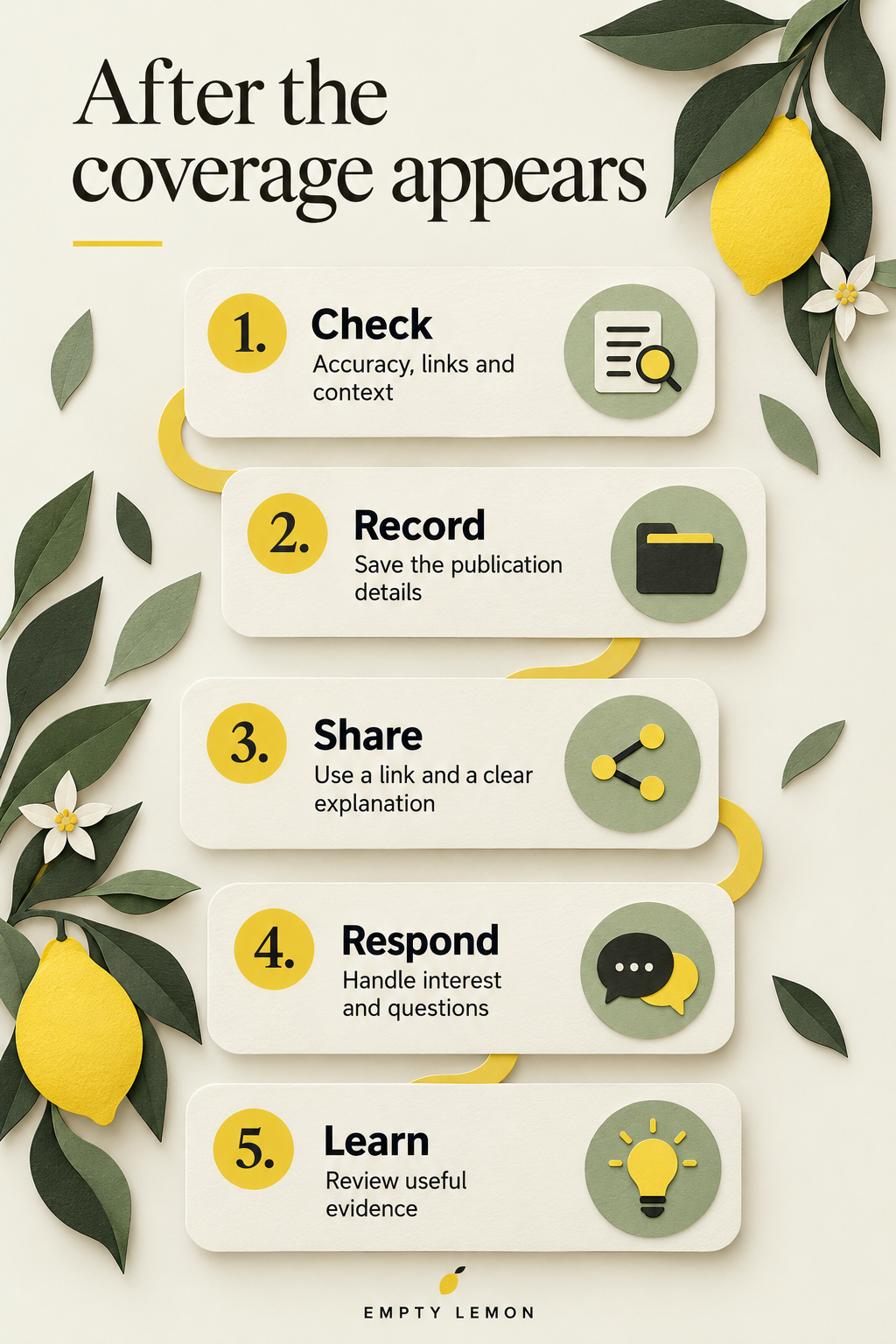
Share a useful explanation
Explain why the article will interest the audience using each channel. A customer newsletter could highlight a practical question it answers. A team update could explain what staff should know before responding.
A fictional training provider quoted about workshop formats might summarise the decision discussed and link to the publication. It should not imply that appearing in the article amounts to an endorsement of its services.
Check permission or applicable usage terms before reproducing an article, screenshot, substantial extract, publisher logo or photograph. A link with your own short explanation is a practical starting point; republishing material requires separate attention to its usage rights.
Prepare for questions and enquiries
Give the team the coverage and supporting facts. Explain which resource or service relates to the topic and who handles questions beyond the usual process.
Make sure the website continues the subject clearly. A visitor interested in one aspect of your expertise should not have to search through unrelated pages to find the explanation.
Agree how enquiry sources will be recorded. Someone saying they saw an article is useful evidence, while leaving open the possibility that other marketing also contributed.
Keep follow-up proportionate
- Send material the journalist is still expecting.
- Thank contributors and share the link where appropriate.
- Respond promptly to relevant questions.
- Record corrections and updates.
- Avoid repeated requests for promotional changes.
If a genuinely useful development follows, assess it on its own merits. Previous coverage does not make every later update relevant to the same publication.
Improve the next campaign
Review which explanations helped, which questions were difficult and whether materials were ready when needed. Compare observable response with the campaign objective and record what remains uncertain.
Turn the review into specific actions: improve a page, revise a brief or prepare stronger evidence. If you need help connecting outreach and customer follow-up, explore Empty Lemon’s services or discuss your next campaign.