

Someone arriving from an article has a particular question or interest. Your website should continue that subject clearly enough for them to understand what the business knows and where to go next.
Before outreach begins, prepare the destination you can offer where a link is appropriate. It can support the journalist with context and help interested readers continue their research.
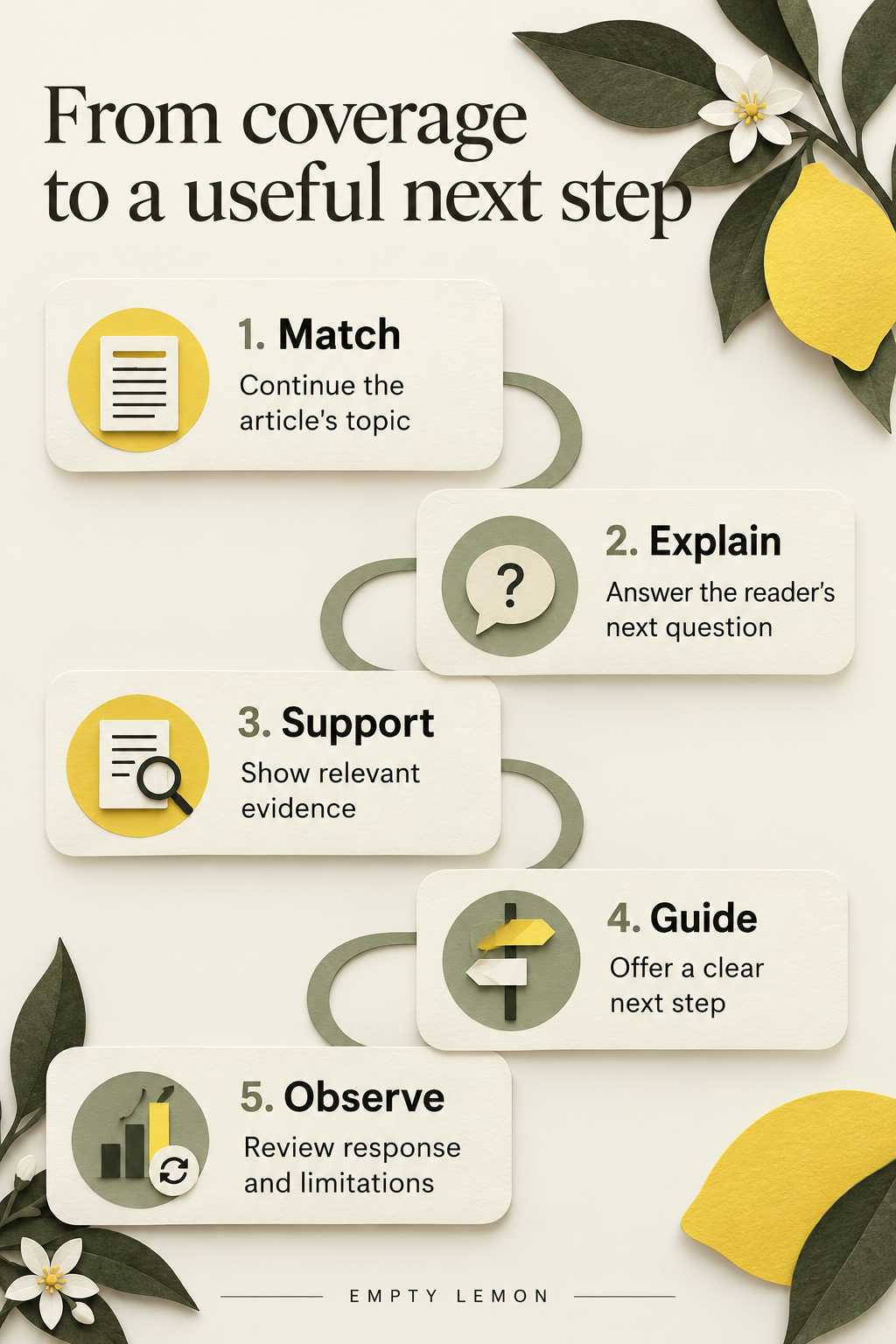
Match the destination to the subject
A homepage may suit a broad introduction; a specialist guide or relevant service page may offer a clearer continuation. Choose the answer the reader is likely to need.
A fictional training provider discussing workshop formats could offer a comparison guide where the publication considers a link appropriate. An unrelated promotional page would break the connection.
A journalist decides whether and how to link. A contribution does not give the business control over that choice.
Explain before asking for action
Make the topic clear in the heading and opening. Answer the likely question and provide sufficient context. Do not require an enquiry simply to reveal the basic explanation.
The fictional provider could explain when shared learning goals suit a workshop and when individual support may be appropriate. Include limitations rather than presenting one format as right for everyone.
The page must also work independently: visitors may arrive from search, a shared link or a later recommendation without reading the original article.
Support the explanation
Use relevant sources, a described process or an approved example. Explain the connection between evidence and claim. Client logos cannot answer every question about suitability.
For research, make the scope, method and limits available. For expert interpretation, clarify the source’s identity and experience.
Our guide to useful business case studies explains how project evidence can support a buying decision.
Offer a natural next step
The next step might be reading a related guide, checking suitability or discussing a brief. Describe what the reader will find or what happens after contact.
Choose the most useful next action for the page, while retaining normal navigation. Several equally prominent requests can make the decision less clear.
See our service-page guide for the information people need before an enquiry.
Test the route
- Does the link reach the intended public page?
- Does the heading continue the topic?
- Are diagrams readable on a phone?
- Are facts and supporting links current?
- Does contact work as described?
Ask someone unfamiliar with the project to follow the route and explain what they understand. Their hesitation provides an editing list. Prepare the people handling enquiries so they can continue the same explanation.
Review response carefully
Where suitable measurement exists, examine visits from relevant links, resource use and enquiries. Record data gaps and other activity that may have contributed.
A useful journey helps the reader continue. It does not establish that every visit or later enquiry was caused solely by the article. Our guide to digital PR measurement explains that distinction.
If outreach and your website feel disconnected, contact Empty Lemon about preparing the explanation and next step together.