

A useful FAQ answers a question someone is likely to have before choosing or using a service. It can clarify a detail, explain a condition or help someone recognise when a conversation is necessary.
Start with the buying process. Questions built around promotional claims often create a second sales pitch while leaving the practical uncertainty unresolved.
Collect genuine questions
Review authorised enquiry summaries and speak to the people handling them. Record the question, the decision behind it and where it arises. Remove identifying customer information from planning material.
Different phrases can reveal one issue. “Do we need experience?” and “Is this suitable for a first session?” may both concern suitability. Group them where a clear answer addresses the underlying uncertainty.
Our guide to customer enquiries and content ideas explains how to develop these observations into a brief.
Keep essential facts in the main explanation
If a fact defines the offer, make it easy to find on the main page. Important eligibility criteria, substantial exclusions and the basic process should not appear only in a final FAQ.
A fictional workshop provider needs to explain who can attend, what is covered and whether equipment is supplied. An FAQ could clarify a remaining question about bringing a colleague or changing an agreed arrangement.
The FAQ should support the page rather than compensate for a vague description.
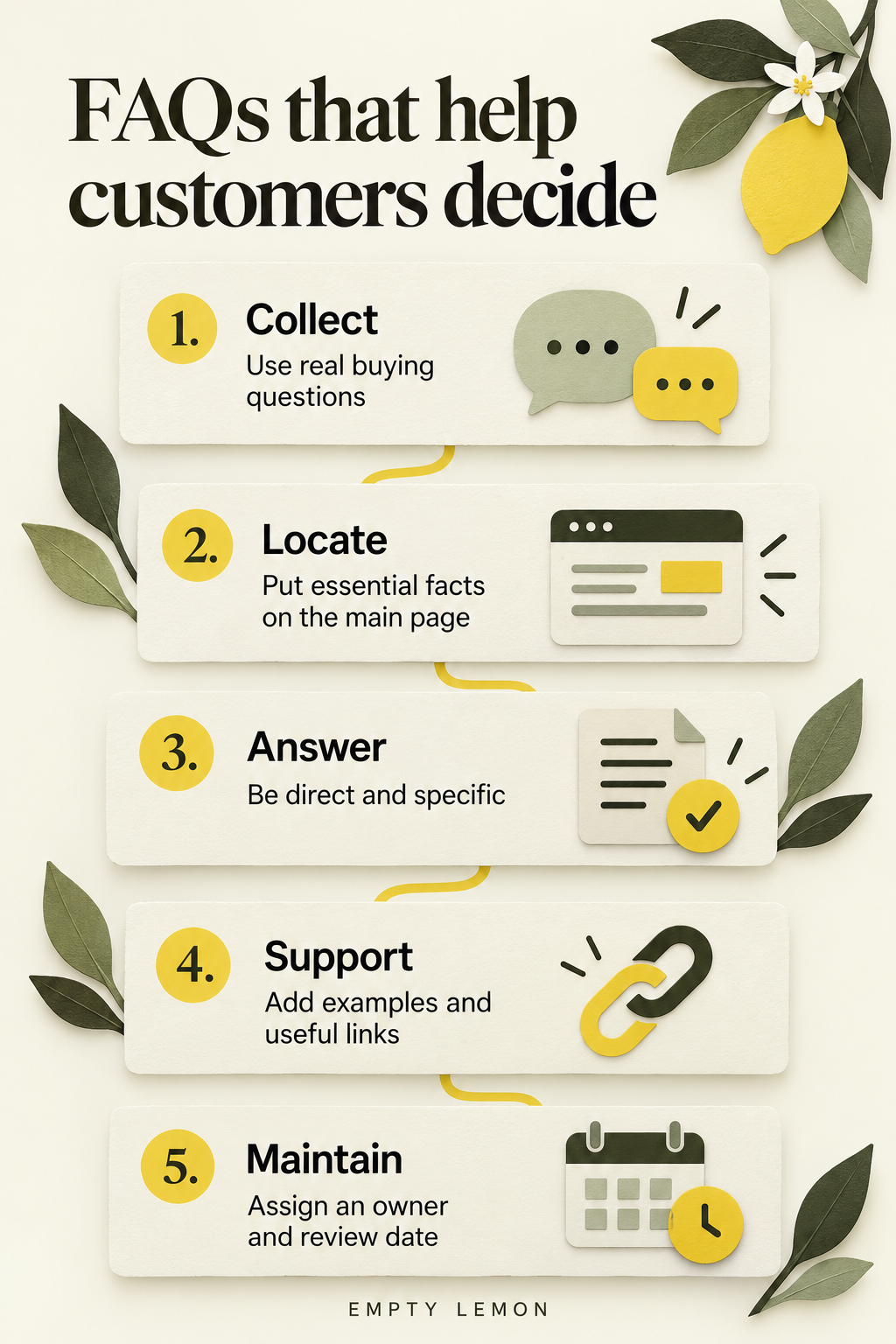
Answer directly, then explain
Give the clearest truthful answer first. Follow it with the conditions or practical steps that matter. A reader should not have to work through a promotional introduction to discover whether the answer is yes, no or dependent on further information.
If dates are agreed individually, say so and explain what the team checks. Do not imply that any date is available when staff, venues or other constraints affect delivery.
Avoid an automatic instruction to get in touch. Even where a conversation is needed, explain why and what information would help.
Give complex questions enough room
A comparison may need examples, limitations and criteria. Provide a concise answer in the FAQ and link to the fuller guide when appropriate.
Describe the link destination, such as a comparison or preparation checklist. The reader should know what to expect before selecting it.
For questions about starting work, make sure the answer agrees with the service page and enquiry process. See our service-page guide.
Check the answer with the delivery team
- Does it match the current offer?
- Are relevant exceptions clear?
- Can staff explain it consistently?
- Do linked pages agree?
- Who will maintain it?
A short specialist review can stop polished wording creating the wrong expectation. Use actual processes as the basis, rather than the answer that sounds easiest to promote.
Keep the questions current
Assign an owner and review when scope, pricing arrangements or delivery changes. Remove questions with no continuing purpose and improve answers that repeatedly need further clarification.
Ask someone unfamiliar with the service to find an answer and explain its meaning for their situation. Their difficulties reveal what needs editing. If your team keeps resolving the same uncertainty, talk to Empty Lemon about clearer service content.